If you’ve closed on your first house, congratulations! You survived the bidding wars, the mortgage paperwork, and the home inspector who pointed at things with a flashlight while making noncommittal sounds. Now you’re standing in your new kitchen, running the tap, and wondering: should this take thirty seconds to get hot? Is that gurgling normal? Why does the water pressure drop when someone flushes upstairs?
Welcome to homeownership, where every strange sound from the pipes sends you spiraling into Google at midnight.
Here’s what nobody mentions during those exciting walk-throughs: your home’s plumbing is essentially a living system. Pipes age. Connections loosen. Seals wear out. Water heaters corrode from the inside. And most of this happens completely out of sight until something goes catastrophically wrong at the worst possible time—like Christmas morning when your in-laws are visiting.
A professional plumbing inspection isn’t about paranoia. It’s about actually knowing what you bought. Think of it as properly maintaining your home’s circulatory system, rather than waiting to meet it in an emergency room.
What a Professional Plumbing Inspection Actually Is
When you hire someone for a professional plumbing inspection, you’re getting a trained, licensed plumber inspection specialist who examines every accessible component of your water and waste systems. They’re not just looking for current leaks or clogs—they’re hunting for warning signs that something will fail soon.
It’s like the difference between a doctor treating your flu versus catching pre-diabetes before it becomes diabetes. One is reactive. The other prevents disasters.
Your plumber crawls into spaces you’d never go, checks valves you didn’t know existed, and translates weird sounds into actual diagnoses.
Why You Actually Need This (Beyond Just Peace of Mind)
A solid residential plumbing inspection delivers tangible benefits:
- You learn how YOUR specific house works -Cookie-cutter houses don’t exist; every plumbing system has quirks
- Problems get caught while they’re cheap -Replacing a $40 washer beats replacing water-damaged drywall
- Safety issues surface -Some old installations violate current codes for good reasons
- You can budget intelligently -Knowing your water heater is 11 years old prevents surprise replacements
Here’s a reality check from the EPA’s WaterSense program: American households waste roughly 1 trillion gallons of water each year through leaks. That’s not a typo. Most people don’t even realize they’re contributing to that number because leaks hide inside walls, under slabs, or in toilet tanks where you never look.
What Ignoring Problems Actually Costs:
Issue | If Addressed Early | If Left Unchecked |
| Dripping faucet | Simple seal or washer replacement | Ongoing water waste, fixture deterioration, internal corrosion |
Slow drain | Localised blockage cleared | Full pipe obstruction, pressure buildup, potential overflow |
| Intermittently running toilet | Valve or flapper adjustment | Continuous water loss, internal component failure |
Minor water heater leak | Localised fitting or valve repair | Structural tank damage, sudden rupture, surrounding water damage |
These aren’t inflated numbers. Talk to anyone who ignored a “minor issue,” and they’ll confirm—small problems don’t stay small.
When to Actually Schedule This Thing
Timing your plumbing inspection for new homeowners matters:
- During your home-buying inspection period – Sellers often pay for repairs found before closing
- First month after moving in – If you skipped it during purchase (common mistake)
- Buying anything built before 1990 – Older homes have older problems
- When your water bill jumps inexplicably – Sudden increases rarely happen randomly
- After pressure drops or temperatures swing – Symptoms indicating developing issues
The U.S. Census Bureau data shows that about 38% of homes were built before 1970. If you bought an older place, you inherited plumbing that’s already lived longer than most marriages. Inspection stops being optional at that point.
What Gets Examined During the Inspection
A thorough home plumbing inspection checklist covers distinct areas. Here’s what actually gets scrutinized:
Water Supply Lines
These bring fresh water into your house under pressure. Inspectors examine:
- Corrosion patterns – Especially at joints, bends, connections
- Pipe material age – Galvanized steel from the 1950s behaves differently from modern copper
- Connection security – Where supply meets fixtures, appliances, and heaters
- Pressure readings – Inconsistent pressure suggests restrictions or leaks hiding somewhere
Even small corrosion spots expand. What looks like surface rust today becomes a gushing pipe break next winter when temperatures drop.
Drain and Sewer Lines
These move wastewater out of your property. Trouble builds up quietly:
- Multiple slow drains = Main line going bad
- Gurgling when you flush = Vent issues or partial clog
- Sewage smell with nothing visible = Cracked pipe or broken seal somewhere
- Backups keep happening in one spot = Something’s lodged in that section
The nightmare scenario? Most serious drain issues happen underground, where they’re invisible until sewage backs up into your shower. That’s an experience nobody forgets.
Fixtures and Faucets
Every sink, shower, tub, and outdoor connection gets checked:
- Drips (even one drop per second wastes 2,700+ gallons yearly)
- Temperature inconsistencies suggesting valve problems
- Loose installations stressing pipes
- Flow reduction from mineral buildup
According to EPA statistics, fixing easily corrected household leaks saves homeowners about 10% on water bills. That’s real money staying in your account instead of literally going down the drain.
Toilets and Shut-Off Valves
Toilets use nearly 30% of indoor water. Inspectors check:
- Flush efficiency – Clears on first attempt or needs multiple flushes?
- Refill timing – Should complete within 20-30 seconds
- Silent tank leaks – Add food coloring to check
- Valve operation – Must close completely for repairs
- Wax ring condition – Leaks here destroy floors invisibly
Fun fact from the EPA: pre-1980 toilets use 5-7 gallons per flush. Modern efficient models use 1.28 gallons. If you’re still flushing with vintage equipment, you’re essentially throwing money into the sewer with every use.
Water Heater System
This appliance works harder than almost anything in your house. Professionals examine:
- Exterior tank condition (rust, moisture, corrosion)
- Temperature/pressure relief valve function
- Age compared to a typical 8-12 year lifespan
- Venting safety (prevents carbon monoxide issues)
- Sediment levels affecting efficiency
Water heaters fail suddenly, not gradually. One day it’s working fine. The next morning, you’ve got 50 gallons flooding your basement.
Technology That Changed Everything
Modern plumbing inspection tools and technology reveal what used to stay hidden until disaster struck:
Video Camera Inspections
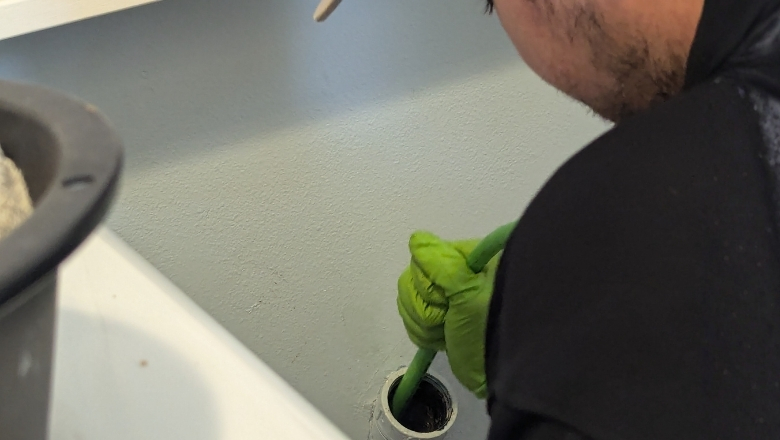
A video camera plumbing inspection uses a waterproof camera to feed a live video through your drain lines while the plumber watches it on a monitor.
What cameras find:
- Tree roots are penetrating sewer lines
- Grease blockages forming
- Pipe sections that collapsed or separated
- Previous “repairs” were done incorrectly
- Corrosion is eating through from the inside
This eliminated guesswork. Instead of “something’s wrong somewhere in this 60-foot line,” plumbers now say “there’s a root intrusion at 37 feet near the oak tree.”
Leak Detection Equipment
Leak detection during inspection uses genuinely cool technology:
- Acoustic listening devices – Detect water escaping under pressure through solid materials
- Thermal imaging cameras – Show temperature variations, moisture creates
- Moisture meters – Measure dampness levels inside walls without opening them
- Tracer gas systems – Find underground leaks through soil
These catch problems before you notice ceiling stains, buckled floors, or mold spreading behind walls.
Pressure Testing Tools
Pressure tests verify your plumbing system evaluation actually holds water:
- Static tests reveal drops indicating leaks
- Flow tests measure delivery capacity
- Backflow tests ensure contamination protection
Inspection Tool | What It Detects | Why It Matters |
| Video camera | Root intrusion, pipe collapse, grease buildup | Prevents hidden sewer failures and structural pipe damage |
Thermal imaging | Temperature anomalies from concealed leaks | Stops mold growth and moisture damage behind walls |
Acoustic detection | Pressurised water escaping underground | Identifies supply line leaks before surface collapse |
| Pressure testing | Weak points and micro-leaks in the system | Reduces risk of sudden pipe bursts and system failure |
What Inspectors Usually Find
Even well-maintained homes surprise people during plumbing inspection services:
Leaks and Corrosion
Water damage creeps up slowly. Typical discoveries:
- Galvanic corrosion, where different metals connect (chemistry eats pipes)
- Deteriorated washers and seals
- Pinhole leaks in copper from acidic water
- Supply connections are corroded and ready to separate
Finding these during the plumbing inspection process may cost hundreds of dollars to fix. Finding them after six months of hidden leaking costs thousands in water damage repair.
Code Violations or Sketchy Installations
Old houses and DIY previous owners leave behind some wild situations:
- Wrong materials: PVC drain where the code says cast iron only
- Missing vents: Sewer gas just sits there indoors.
- No backflow prevention: Contamination can sneak back in
- Improper slopes: Drains won’t move water by gravity alone
Getting these fixed helps plumbing safety and code compliance while keeping resale value intact. Buyers’ inspectors will absolutely catch these exact problems when you sell down the road.
Components Near End-of-Life
Everything wears out eventually:
- Water heaters past 10 years (living on borrowed time)
- Original 1970s fixtures (inefficient, parts unavailable)
- Galvanized pipes showing heavy corrosion
- Polybutylene supply lines (known for catastrophic failures)
Knowing this enables preventative plumbing maintenance planning instead of panicked emergency calls at midnight.
What Happens After the Inspector Leaves
The actual inspection is phase one. Real value comes next:
Your Inspection Report
You’ll receive documentation including:
- System overview – Everything examined, current condition
- Problem photographs – Visual proof of issues
- Severity classifications – Urgent versus monitor-and-wait
- Cost estimates – Realistic repair ranges
- Prevention recommendations – How to avoid future problems
Keep this document. It becomes your plumbing system’s medical history.
Understanding What to Fix When
Not everything needs immediate action. Good plumbers categorize:
- Fix immediately – Active leaks, safety violations, failing equipment
- Address within 6-12 months – Components deteriorating but still functional
- Monitor regularly – Minor issues that may stabilize
- Consider upgrading – Efficiency improvements that pay for themselves
This prevents panic spending while ensuring safety issues get handled.
Why First-Time Buyers Benefit Most
Think of this as your essential first-time homeowner plumbing guide lesson: inspections show you what’s specific to your house.
What you actually gain:
- Knowing where emergency shut-offs are located (critical during leaks)
- Understanding normal sounds versus warning signs
- Realistic budgeting for inevitable maintenance
- Confidence in handling minor issues yourself
- Peace of mind that nothing’s secretly failing
Real talk from the U.S. Census Bureau: the median existing home age exceeds 40 years. First-time buyers mostly purchase older homes with aging infrastructure. Understanding what you bought from day one changes everything.
Quick Reference Guide
Inspection Area | What Gets Checked | Why This Matters |
Supply Lines | Leaks, corrosion, pressure, materials | Prevents floods, ensures adequate water delivery |
| Drains/Sewers | Blockages, damage, flow, venting | Stops sewage backups, foundation issues |
Fixtures | Drips, efficiency, operation | Eliminates waste, prevents gradual damage |
| Toilets | Leaks, valves, seals, performance | Biggest water users, hidden damage potential |
Water Heater | Age, safety, condition, efficiency | Avoids catastrophic tank failures |
Bottom Line: Know Your Pipes Before They Introduce Themselves
A professional plumbing inspection gives you something most homeowners lack: actual knowledge of the systems constantly running behind your walls. For first-time buyers especially, that knowledge prevents the kind of stress that comes from unexpected disasters.
A thorough plumbing maintenance inspection by someone who knows what they’re doing transforms mysterious infrastructure into systems you understand and manage confidently.
Need reliable plumbing inspection services? Alpine Plumbing Services offers complete residential plumbing inspections, full repair services, drain solutions, and water heater expertise with a focus on honest assessments and straightforward communication. We explain what they find and why it matters before recommending anything.
Ready to actually understand your home’s plumbing instead of just hoping everything keeps working?
Contact our team at (360) 939-2424 to schedule an inspection that stops problems before they start, rather than just reacting when pipes burst at 3 AM on a holiday weekend.
