A quiet shift is underway in homes across areas like Burlington, Marysville, Stanwood, and Mount Vernon. Homeowners who once replaced their old water heater with the same model they had before are now asking a different question: Is there a better option?
For a growing number of families throughout the Pacific Northwest, the answer has been a tankless hot water heater. Not because they read about it in a brochure, but because the limitations of traditional storage tanks had finally become impossible to ignore, including rising energy bills, tanks taking up half the utility room, and that familiar frustration of cold water arriving uninvited midway through a shower.
According to the U.S. Department of Energy, homes using 41 gallons or less of hot water daily can improve energy efficiency by 24% to 34% with tankless water heater installation compared to conventional storage systems.
That kind of difference is hard to overlook. In this blog post, we break down exactly why more homeowners are making the switch and what you should know before deciding if it is the right move for your home.
Endless Hot Water Without Running Out Mid-Shower
Almost every household with a traditional tank has lived through this moment. The dishwasher runs, someone starts a load of laundry, and then a perfectly good shower turns cold without warning. It is not a malfunction. It is simply what happens when a storage tank runs out of heated water and needs time to recover.
Tankless hot water heaters operate on a completely different principle. Water heats as it passes through the unit, so the supply does not run out the way a tank would. For larger households in Marysville and Mount Vernon, where multiple people share bathrooms and mornings move fast, that difference is felt immediately.
Feature | Traditional Tank | Tankless System |
| Hot water supply | Fixed tank capacity | Continuous on demand |
Recovery time after heavy use | 30 to 60 minutes | None required |
| Performance during peak hours | Declines with use | Remains consistent |
Risk of mid-use cold water | Common | Significantly reduced |
Quick Tip: If your household regularly runs out of hot water during busy mornings, the issue is likely capacity, not a broken system. An upgrade to a tankless water heater may resolve it entirely.
How Tankless Systems Help Reduce Monthly Energy Costs
Traditional water heaters run almost constantly. Even at two in the morning, when nobody is awake, a storage tank quietly reheats water that nobody is using. That process, called standby heat loss, adds up on a utility bill month after month without ever delivering a single drop of water to anyone.
Tankless water heater service eliminates that cycle. The unit heats water when a tap opens and stops the moment it closes. Nothing runs in between.
The U.S. Environmental Protection Agency notes that ENERGY STAR-certified high-efficiency water heaters can significantly reduce residential energy consumption compared to standard models.
In Stanwood and Mount Vernon, where colder winters drive higher household water usage for months at a time, that efficiency advantage becomes especially meaningful.
Area of Savings | How Tankless Helps |
| Monthly utility bills | Eliminates standby heating costs entirely |
Seasonal usage spikes | Handles high demand without excess energy waste |
| Long-term operating costs | Less wear means fewer repair expenses over time |
Home resale value | Energy efficiency is an increasingly attractive feature |
Space-Saving Benefits for Modern Homes
A standard storage water heater is not a small appliance. Most units occupy a significant corner of a garage, utility closet, or basement: space that many homeowners in Burlington and Stanwood would genuinely prefer to use for something else.
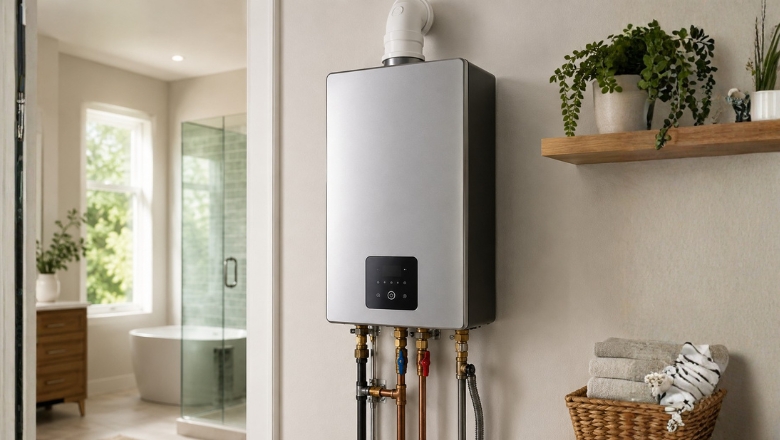
A compact water heater system mounts directly to the wall. That is the entire footprint. The floor space that was previously committed to a bulky tank becomes available again, which makes a real difference in situations like:
- Garage conversions where every square foot counts
- Utility room remodels aiming for a cleaner, less cluttered layout
- Basement finishing projects where storage space is part of the plan
- Older homes near downtown Mount Vernon, where mechanical rooms are already tight
For homeowners updating their homes with the long term in mind, that kind of flexibility quietly becomes one of the more practical reasons to make the switch.
Longer Lifespan Compared to Traditional Water Heaters
A traditional tank water heater typically lasts 8 to 12 years. Most homeowners replace them once, sometimes twice, over the course of owning a home. When properly maintained, tankless systems can last 20 years or more.
The Department of Energy confirms that tankless systems generally offer a longer service life than conventional storage units.
Water Heater Type | Average Lifespan |
| Traditional storage tank | 8 to 12 years |
Residential tankless water heater | Up to 20 years with proper maintenance |
That longevity does come with a condition. Tankless water heater maintenance needs to happen consistently. In areas throughout Snohomish and Skagit counties where mineral content in the water can affect plumbing systems, tankless water heater flush service and descaling appointments keep systems running well into their second decade.
Without routine tankless water heater annual maintenance, hard water deposits accumulate inside the unit and begin causing reduced flow, tankless unit temperature issues, and eventually premature component failure. Scheduled care can help prevent all of that.
Why Homeowners Love Faster, More Reliable Performance
Modern households simply use more hot water than they did a generation ago. More bathrooms, more appliances, busier schedules, and less patience for systems that cannot keep up. A whole-house hot water solution that heats water on demand rather than cycling through a tank fits the rhythm of how families actually live today.
Benefits homeowners consistently mention after switching:
- More consistent water temperature throughout the home
- No waiting for the tank to recover between heavy uses
- Better performance during the winter months when the incoming groundwater is colder
- Reduced anxiety about running out of hot water during guest periods or busy periods
- Lower standby energy waste across the year
For anyone who has been searching for a tankless heater repair near me after an aging traditional unit started underperforming, the reliability comparison between the two systems becomes very clear very quickly.
Is a Tankless Water Heater the Right Upgrade for You?
Tankless technology is not a universal fit for every home, but for the right household, it addresses nearly every limitation posed by a storage tank. A professional evaluation helps determine the correct sizing, fuel type, and installation requirements for your specific setup.
Questions worth considering before upgrading:
- Does your household run out of hot water regularly during peak usage hours?
- Is your current unit more than eight or ten years old?
- Are you remodeling and looking to free up utility or storage space?
- Have your energy bills been climbing without a clear explanation?
- Are you planning to stay in the home long enough to benefit from a longer-lasting system?
System Type | Common Advantages |
| Gas tankless water heater | Higher flow capacity, ideal for larger households |
Electric tankless water heater | Simpler installation in certain home configurations |
Professional tankless water heater service during installation is not optional. Proper sizing and correct venting directly determine how well the system performs long term. A unit that is too small for household demand will underperform no matter how new it is, and installation errors are far more expensive to correct after the fact than to prevent upfront.
The Upgrade That Keeps Delivering, Long After Installation Day
Switching to a modern hot water system is one of those home decisions that tends to pay off in ways people did not fully anticipate quietly. Lower bills, more space, no cold-water surprises, and a system that is still running strong when a traditional tank would have already been replaced once or twice.
For homeowners across Burlington, Marysville, Stanwood, and Mount Vernon, it represents a genuinely practical upgrade for how they actually live in their homes. Alpine Plumbing Services, Inc. has spent more than 23 years helping households throughout Snohomish, Skagit, and Island counties make exactly this kind of decision, from tankless water heater installation and repair to ongoing maintenance service that protects system performance for years ahead.
If you are ready to explore whether a professional tankless water heater upgrade service makes sense for your home, contact us at (360) 939-2424 today.
