
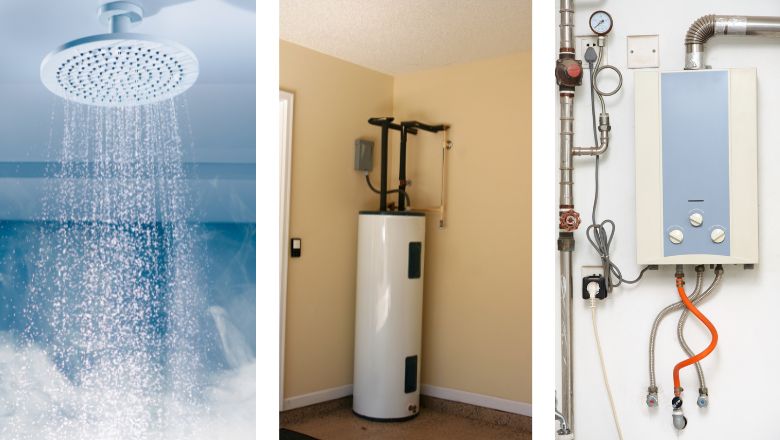
Most homeowners don’t think much about their water heater—until it stops keeping up with daily life. But here’s what makes it worth your attention: this one appliance affects nearly every part of your daily routine. That morning shower before work? The pile of dishes after dinner? All of it depends on having reliable hot water when you need it.
The decision used to be simple. You’d call a plumber, they’d install whatever tank water heater fit in your basement, and that was that. Now? You’ve got the traditional storage tank sitting next to tankless water heaters promising unlimited hot water, and these newer heat-pump water heaters that supposedly cut your energy bill in half.
This water heater guide breaks down what you actually need to know about each system—how they work in real life, what they’ll cost you, and which one makes sense for how your family actually lives.
Getting to Know Traditional Tank Water Heaters
How Tank Systems Work
Traditional tank water heaters are essentially large insulated cylinders that keep 30 to 80 gallons of water hot around the clock. The concept hasn’t changed much in decades because it works.
Your water heater heats the water inside (either electrically or with gas), then keeps it at whatever temperature you’ve set—usually around 120 degrees. Someone turns on the shower, and hot water flows out from the top while fresh cold water enters at the bottom. The heating element kicks back on to warm things up again.
Did you know? In U.S. homes, water heating accounts for about 18% of total residential energy use, making it one of the largest energy expenses for most households, second only to heating and cooling.
The limitation? You’ve only got so much hot water stored. Once your teenage daughter finishes her 20-minute shower and your son jumps in right after, that third person might be getting a chilly surprise.
Advantages of Tank Systems
- They won’t break your budget upfront: Lower costs for both the unit and installation
- Any plumber can fix them: No specialized training required
- They’re dependable for routine use: Perfect for families who run on a schedule
- Replacement is straightforward: Swapping in a new one is usually uncomplicated
What Size Do You Actually Need?
Buy too small, and you’re stuck taking cold showers. Go too big, and you’re paying to heat water you’ll never use. A couple living alone might be fine with 40 gallons, but try running that with three teenagers, and you’ll hear about it daily. A decent water heater sizing guide accounts for how many people live there and when everyone showers.
The Efficiency Question
Modern tank water heaters have better insulation, but they can’t escape the laws of physics. That water loses heat constantly—even when nobody’s using it. The U.S. Department of Energy estimates that this standby heat loss can account for about 18% of what you spend annually on water heating.
Understanding Tankless Water Heaters
How On-Demand Systems Work
Tankless water heaters operate on a fundamentally different approach. Instead of storing hot water in a tank, they heat water on demand—only when a fixture is turned on—eliminating the need for standby storage altogether.
Turn on your kitchen faucet, and cold water rushes through a pipe into the unit where either a gas burner or electric heating elements bring it up to temperature in seconds. You shut it off, and the unit goes dormant until next time.
What does this mean? You can’t “run out” of hot water. Your daughter can take her long shower, your son can take his, and you can still do the dishes afterward.
Here’s something interesting: According to the U.S. Department of Energy, tankless (on-demand) water heaters can be 24%–34% more energy efficient than conventional storage water heaters in many households — meaning lower utility bills and less wasted energy overall.
Why People Make the Switch
- Hot water doesn’t run out: Run multiple showers simultaneously
- Energy only gets used when you need it: No more paying to keep 50 gallons hot at 3 AM
- They barely take up any space: Most models mount on the wall
- They last significantly longer: Expect 15-20 years compared to maybe 10 with a traditional tank
Installation Isn’t Always Simple
Tankless water heaters are power hungry when running. A gas model might require upgrading your gas line or installing new venting. Electric models often need electrical panel upgrades or dedicated circuits. If your house was built before 1990, the water heater installation cost can climb fast.
Keeping Them Running Smoothly
These systems demand regular attention, especially if your water is hard. Minerals build up inside, reducing efficiency. Most manufacturers recommend annual flushing. Skip the water heater maintenance tips, and you might replace a thousand-dollar unit years earlier than necessary.
Understanding Heat-Pump (Hybrid Electric) Water Heaters
How Heat-Pump Systems Work
Heat-pump water heaters approach this differently. Rather than generating heat from electricity or burning gas, they scavenge heat from the air and transfer it to the water. Think of it like your refrigerator working backward.
The system pulls in ambient air, extracts warmth, and transfers that energy into the water in a storage tank. This process uses about 60% less electricity than conventional electric water heaters, according to ENERGY STAR.
Why Efficiency Matters Here
- Your monthly bills drop noticeably: Some homeowners report water heating costs cut in half.
- Smaller environmental footprint: Dramatically less energy for the same hot water.
- Rebates might be available: Many utility companies offer cash back.
Location Makes a Big Difference
These systems need the right environment. They perform best in spaces between 40 and 90°F year-round, with at least 1,000 cubic feet of air space. Basements, garages, and utility rooms usually work well. Stick one in a tiny closet or unheated space, and its efficiency tanks.
The Cost Calculation
You’ll pay considerably more upfront than a standard tank water heater, sometimes double. But run the numbers over 10-15 years, and most homeowners come out ahead. If you’re staying long-term and electricity rates are high, a heat-pump water heater often becomes the best water heater for home economics.
Comparing All Three Options Side by Side
Performance and Efficiency Overview
| Feature | Tank Water Heaters | Tankless Water Heaters | Heat-Pump Water Heaters |
| Hot Water Supply | Limited by tank capacity | Continuous flow | Limited by tank capacity |
| Energy Efficiency | Moderate (0.58–0.65 EF) | High (0.82–0.94 EF) | Very high (2.0–3.5 UEF) |
| Space Requirements | Large (needs 20+ sq ft) | Compact (wall-mounted) | Large (similar to tanks) |
| Typical Lifespan | 8–12 years | 15–20 years | 10–15 years |
| Operating Noise | Quiet | Quiet | Moderate (fan noise) |
| Climate Sensitivity | None | Cold affects gas models | Efficiency drops in cold conditions |
Cost Analysis Breakdown
While exact expenses vary widely, understanding what drives long-term costs helps homeowners compare water heating systems more realistically.
| Cost Factor | Tank Water Heaters | Tankless Water Heaters | Heat-Pump Water Heaters |
| Equipment complexity | Simple design with fewer components | Advanced heating technology and controls | Integrated heat-transfer system |
| Installation requirements | Straightforward replacement in most homes | May require electrical or gas upgrades | Needs adequate space and ventilation |
| Energy usage over time | Higher standby energy loss | Heats water only when needed | Highly efficient energy transfer |
| Maintenance needs | Basic flushing and part replacement | Regular descaling and inspections | Filter cleaning and periodic servicing |
| Long-term ownership considerations | More frequent replacement cycles | Longer service life with proper care | High efficiency but location-dependent performance |
Actual outcomes depend on factors such as household size, water usage patterns, fuel type, local climate, and installation conditions.
What the Numbers Tell Us
When weighing tank vs tankless water heater options or deciding between a hybrid vs tank water heater, doing a real water heater comparison means looking past today’s price tag. Traditional tanks cost less now, but more per month. Tankless units last longer and use less energy, but require a larger initial investment. Heat pumps offer the lowest operating costs but require specific conditions.
Making the Right Choice for Your Home
Matching System to Household Needs
Your household hot water solutions should match your actual living situation:
- Small household (1-2 people): A 30-40 gallon traditional tank water heater typically handles daily use
- Medium household (3-4 people): Tankless water heaters excel here, particularly when schedules vary
- Large household (5+ people): Either a properly sized tankless unit or a larger capacity tank works
- Efficiency-focused households: Heat-pump water heaters provide the lowest energy bills long-term
Budget Reality Check
Don’t fixate on what you’ll pay this month. Calculate energy costs over the expected lifespan of the water heater. A system costing $50 less to buy but $40 more monthly to run becomes expensive after 15 months. When planning your water heater replacement, add up the total cost of ownership instead of just comparing water heater installation costs.
Maintenance Expectations
Every system requires upkeep. Traditional tanks need periodic draining. Tankless models require annual flushing, particularly with high-mineral-content water. Heat pumps do need a bit of upkeep—think cleaning the air filter now and then and getting the coils checked occasionally. Nothing too complicated, but worth keeping in mind.
Final Takeaway: Comfort, Efficiency, and Smart Planning
Choosing a water heater isn’t about picking the “best” one on paper—it’s about what actually works for your home and family. Some people stick with a classic tank water heater, and it serves them perfectly. Others love the instant hot water from a tankless water heater, and for homes looking to save on energy bills, a heat-pump water heater can be a real game-changer.
Not sure which one fits? Alpine Plumbing Services, Inc. can walk you through a simple water heater comparison. We’ll look at the household hot water solutions you already have, talk about your household’s hot water needs, and suggest energy-efficient water heater options that actually save money over time.
Thinking it might be time for a water heater replacement? Give us a call at (360) 939-2424. We’ll help you pick the right solution so your home stays comfortable and efficient—without overcomplicating things.
