Most plumbing failures don’t start with a bang. It begins with a whisper. A sink that drains a few seconds slower than it used to, a faint odor from the kitchen drain, a gurgle you half-notice and quickly dismiss. That whisper below your floors is often the sound of a pipe losing its diameter, one thin layer of grease or scale at a time, until the day it stops draining altogether and starts pushing water back the wrong way. That’s what we’ve been doing at Alpine Plumbing for over 23 years, and we’ve seen the same pattern play out over and over again. The one thing we know is that the homeowners who catch it early are the homeowners who never see the worst of it.
This blog breaks down exactly what happens inside a pipe as it clogs, why the damage compounds faster than most homeowners expect, and what a real preventive drain cleaning routine actually involves. You’ll also find the specific warning signs worth acting on and how professional drain cleaning services differ from anything you can do with a bottle from the hardware store.
What Is Preventive Drain Cleaning?
Before we get into warning signs and long-term savings, it helps to understand what this service is and why it’s treated so differently than a one-off emergency call. The idea and the process itself are divided into the two sections below.
Understanding Preventive Plumbing Maintenance
Preventive plumbing maintenance is care that is scheduled before a problem exists, not after. Instead of waiting for a backup to necessitate a service call, drains are inspected and cleaned on a set interval, so buildup never has a chance to harden into something a plunger or a bottle of drain cleaner can’t handle.
The logic mirrors most other systems in your home. Furnace filters get replaced before they choke airflow. Roofs get inspected before a small leak becomes a ceiling stain. Drain maintenance works the same way, treating a narrowing pipe as a problem to solve early rather than a crisis to react to later.
What a Professional Drain Cleaning Service Includes
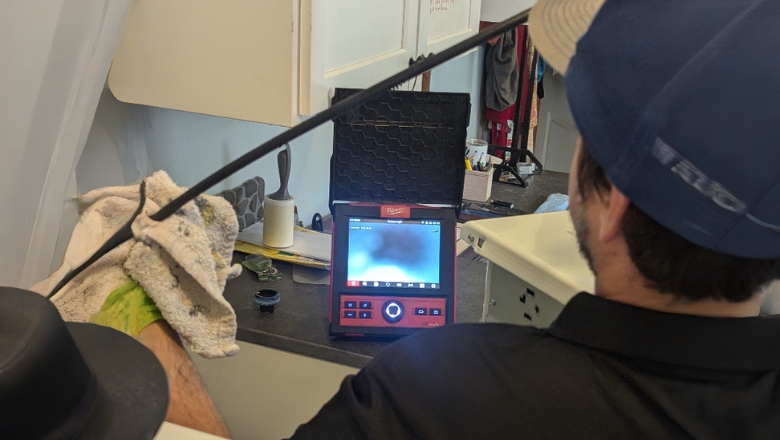
A real drain cleaning service starts with a camera-assisted drain inspection so that a technician can actually see what is inside the pipe instead of guessing. From there, the buildup is physically removed, usually with hydro jetting services that can produce pressures from 1,500 to 4,000 PSI, enough to strip grease, mineral scale, and biofilm off of the entire interior wall of the pipe, rather than just punching a hole through the middle of a clog.
That distinction matters more than most homeowners realize. A drain snake clears a path. Hydro jetting services clear the whole pipe, which is why the results tend to last considerably longer than mechanical rodding alone.
Why Drain Clogs Become Expensive Repairs
A clog rarely stays a clog. When buildup narrows a pipe, water must pass through a smaller space at a higher speed and under more pressure, and that added stress works against joints, seams, and any weak point already present in aging plumbing. What begins as slow draining can eventually become a crack in the pipe, a wet crawlspace, or water pooling where it doesn’t belong.
Tree roots make this worse in ways most homeowners never see coming. Roots don’t damage healthy pipe on their own; they’re drawn toward moisture and warmth escaping through existing cracks or loose joints, then wedge themselves into that opening and expand. Research from the U.S. Forest Service shows that more than half of all sewer line blockages nationwide are caused by root intrusion. Each season, a root mass continues to grow inside, and a line that clears easily in spring can be blocked solid again by fall.
A single ignored clog rarely stays a single problem for long.
Water damage is another cost increase. Many household leaks start out as slow, undetected drain problems, wasting incredible amounts of water before anyone sees a change in the bill. The EPA estimates that the average household loses about 9,400 gallons of water a year to leaks, and nationally, household leaks waste nearly 900 billion gallons a year. A clog that backs up instead of draining sends that same water where it was never meant to go.
How Preventive Drain Cleaning Saves Homeowners Money
The savings from residential drain cleaning aren’t hypothetical. They come from preventing the very sequence of events described above from even beginning.
- Root problems get caught while they’re still manageable: Removing a small root mass during a routine cleaning is far simpler than dealing with a collapsed line months later.
- Pipes retain their full diameter: A clean pipe moves water efficiently, which reduces the pressure and strain that eventually cause joints to fail.
- Fewer emergency calls: Backups tend to happen at the worst possible times; routine maintenance dramatically lowers how often that happens.
- Less water and structural damage: Clear drains stop wastewater from finding its way into flooring, subfloors, or drywall.
Common Household Drains That Need Regular Drain Cleaning
Not all drains in your home fail the same way. Knowing what’s actually building up inside each drain lets you know where to focus your drain maintenance efforts.
| Drain Type | What Actually Builds Up | Why It’s a Problem |
| Kitchen sink | Cooling grease, food particles, soap film | Grease solidifies on pipe walls as it cools, narrowing the line with every use |
| Bathroom sink & tub | Hair, soap scum, mineral deposits | Hair binds with soap residue to form a mesh that traps everything behind it |
| Floor drains | Sediment, dirt, and organic debris | Often ignored until standing water reveals a blockage already in progress |
| Main sewer line | Root intrusion, sludge, aging pipe joints | Affects every fixture in the home at once, not just one drain |
Warning Signs You Should Schedule Professional Drain Cleaning
Pipes rarely fail without warning. The signs are usually there weeks or months before a full backup, and catching them early is what separates a routine cleaning from an emergency repair.
- Drainage that’s noticeably slower than it was a few weeks ago
- Gurgling sounds coming from a drain, toilet, or nearby fixture
- A recurring odor that returns even after the drain has been cleaned
- More than one fixture backing up around the same time
- A drain that clogs repeatedly despite being cleared on your own
If you see more than one of these at the same time, it’s usually a sign that there’s more than just a surface-level clog, and it’s worth getting a professional plumber in to have a look before things get any worse.
Benefits of Hiring a Professional Drain Cleaning Service Provider
For very minor blockages, you can use tools you purchase from the store, but they do not solve the root cause. A trained drain cleaning company brings equipment and diagnostic tools that go far beyond anything available at a hardware store.
Chemical cleaners vs. snaking vs. hydro jetting: they are not interchangeable.
| Method | What It Actually Does | Limitation |
| Chemical drain cleaner | Dissolves some organic material on contact | Can corrode older pipes; leaves buildup on walls untouched |
| Mechanical snaking | Punches a path through the clog | Clears the center of the pipe, not the walls; buildup often returns |
| Hydro jetting | Scours the full 360-degree interior of the pipe | Requires a plumbing inspection first to confirm pipe material can handle the pressure |
A professional plumber doesn’t just clear the clog in front of them; they identify why it formed. That combination of plumbing inspection and targeted drain line cleaning is what keeps the same problem from reappearing six months later, and it’s the difference between routine care and a cycle of repeat plumbing repair services.
Why Routine Drain Cleaning Is a Smart Investment for Homeowners
Routine drain cleaning protects one of the most disruptive systems in your home to repair once something actually fails. A broken pipe, collapsed line, or sewer backup costs more than just money to fix – it costs time, displaces a household, and often damages flooring or drywall that has to be replaced separately from the plumbing itself.
Homeowners who commit to consistent home drain cleaning and sewer line maintenance are simply less likely to face any of that. Their pipes carry water the way they were designed to, and small issues get resolved while they’re still small.
Protecting Your Pipes Before a Clog Becomes a Crisis
A slow drain today is rarely just a slow drain. It’s usually the earliest sign of buildup, root intrusion, or wear that will keep getting worse until something forces the issue, and by then, the fix is almost always bigger, messier, and more disruptive than it needed to be. Preventive drain cleaning exists to interrupt that pattern before it starts, protecting both your plumbing and your home’s structure at the same time.
We provide drain cleaning services for homeowners throughout Stanwood, Burlington, Mount Vernon, and Marysville, using camera-assisted drain inspection and hydro jetting services calibrated to each home’s specific pipe material and condition. Our team walks you through exactly what we find and what we recommend, so you’re never left guessing about the health of your plumbing.
If your drains have been slow, noisy, or backing up more than once, that’s worth addressing now rather than later. Call Alpine Plumbing at (360) 939-242 for a drain inspection. Don’t let a small problem become a costly one.
