A drain that gurgles, backs up, or drains slower each week is more than a minor inconvenience. It’s a sign something inside the pipe has already constricted past the point where a plunger will help. That narrowing never reverses itself, left to its own devices. Grease hardens, roots widen the crack they found, and the working diameter of the pipe shrinks until one ordinary load of laundry shoves wastewater back through a floor drain or shower.
Our team at Alpine Plumbing has opened up more than a few pipes that reached exactly that point, and knowing which clearing method actually fits the problem is what separates a permanent fix from a repeat visit.
Hydro jetting vs. drain snaking isn’t a matter of picking the stronger-sounding tool; it’s a diagnosis. This blog explains the mechanics behind both methods, the pressure ranges and pipe conditions that determine which one applies, and how a properly performed drain cleaning decision protects the rest of your plumbing system from damage neither method should ever cause.
Understanding Hydro Jetting and Drain Snaking
Both methods can clear blockages, but they operate on completely different principles; one is mechanical and the other hydraulic. Understanding the difference can alter the way you should interpret your plumber’s recommendation the next time a drain backs up.
What Is Drain Snaking?
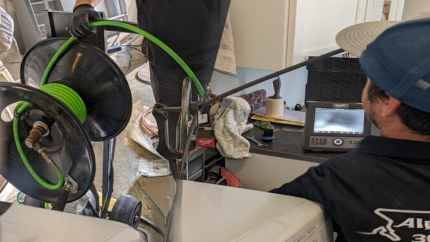
An auger, or a drain snake, is a flexible steel cable fed into the pipe until it meets resistance. A rotating cutting head at the tip either shreds the obstruction or hooks it so the cable can pull it back out. Cable diameters typically range from a quarter inch for small interior lines up to three-quarters of an inch for larger drains.
Snaking is a point solution. It creates a void in the clog right where the cable touched, and flow is restored almost immediately. But it doesn’t do anything to the buildup along the rest of the pipe wall except at that one point of contact.
What Is Hydro Jetting?
Hydro jetting forces water through a specialized nozzle at pressures generally between 1,500 and 4,000 PSI, depending on pipe size and material. Residential interior drains are usually jetted at the low end of the range, about 1,500 to 2,500 PSI at four to eight gallons a minute, while larger main sewer lines can go up to 2,500 to 3,500 PSI at higher flow rates to push debris through four- and six-inch pipe.
A forward-cutting nozzle punches through a complete blockage first. A rotating or “chisel” nozzle sprays backward and sideways as it’s pulled through the line, scouring grease, scale, and root fragments off the entire interior wall. The result is a pipe cleaned back to the original diameter, not a hole punched through the obstruction.
Hydro Jetting vs. Drain Snaking: What Is the Difference?
The difference between the two ways comes out when you actually compare what each leaves behind inside the pipe when the job is done.
| Factor | Drain Snaking | Hydro Jetting |
| Mechanism | Mechanical cable, cutting/hooking | Pressurized water, 1,500–4,000 PSI |
| Cleaning scope | Single point of contact | Full interior circumference |
| Grease and scale | Leaves coating intact | Strips buildup from pipe walls |
| Root fragments | Cuts through, doesn’t clear line | Flushes fragments out completely |
| Pipe pre-check needed | Minimal | Camera inspection strongly advised |
| Typical result duration | Weeks to months for recurring clogs | Months to years, if source is addressed |
A snake reopens the pipe. A jetter resets it. That one difference is why a clog that keeps coming back every few weeks rarely gets solved by repeating the same snaking visit.
When Is Drain Snaking the Right Choice?
Snaking remains the faster, less invasive option for clogs confined to one fixture with no history of recurrence. It’s the right first move when the problem is localized rather than systemic.
Situations where a cable is typically sufficient include:
- A single bathroom or kitchen drain running slow
- Hair tangles close to the drain opening
- Small foreign objects lodged in the line
- A first-time clog with no prior service history
- Lines with no evidence of scale, grease coating, or root growth
Snaking gets water moving again without the extra step of a full pipe assessment, when a call is for one fixture instead of a pattern throughout the house.
When Does Your Home Need Hydro Jetting?
Hydro jetting becomes the appropriate call once a clog reappears, once multiple drains slow down at the same time, or once the obstruction is something a cable physically cannot remove, such as tree root intrusion or years of hardened fat, oil, and grease coating the pipe wall.
Homes built before the 1970s often still run on clay or cast iron sewer lines joined with materials that degrade over decades, creating exactly the small gaps roots are drawn toward. Left uncleared, root intrusion typically regrows within one to three years if only the visible mass is cut away rather than fully flushed and treated at the source.
Properties with mature trees growing close to sewer lines, or a service history of repeated drain blockage removal calls to the same section of pipe, are the strongest candidates. Once the same spot needs clearing every few months, that pattern itself is the diagnostic; it points to buildup along the whole line, not a single localized obstruction.
Can Hydro Jetting Damage Your Plumbing Pipes?
Hydro jetting is engineered around pressure, and pressure applied to the wrong pipe can turn a cleaning job into a structural problem. The method itself is not dangerous, but the mismatched pressure and the state of the pipe lead to damage.
- Which Pipes Handle Jetting Well
Modern PVC, ABS, and properly maintained cast iron usually handle pressures at the upper end of the standard range without any problem, since their joints and wall thickness were designed for it.
- Why Camera Inspection Comes First
Older clay, deteriorated cast iron, and galvanized pipe need lower pressure, often kept near 1,500 to 2,500 PSI, to avoid stressing weakened joints. Before the pipe is even laid, a CCTV camera runs through the line to confirm pipe material, joint condition, and any existing cracks, so the plumber can calibrate pressure before water ever enters the line.
Skipping the camera inspection, not the jetting itself, is where pipe damage actually originates. A responsible pipe inspection always precedes a jetting decision on any line with unknown history.
How Plumbers Choose the Right Drain Cleaning Method
No two service calls get the same answer, because no two pipes carry the same history. Plumbers weigh several factors before recommending either method rather than defaulting to whichever tool is already on the truck.
The decision typically comes down to:
- Clog history: First occurrence or a repeat visit to the same line.
- Pipe age and material: PVC and sound cast iron versus older clay or galvanized pipe.
- Blockage composition: A single object versus grease coating or root mass.
- Scope: One fixture affected or multiple drains and the main line.
- Camera findings: Visible confirmation of what the pipe actually contains.
This is where genuine field experience in professional plumbing services shows up. Jetting a compromised line, or repeatedly snaking a problem that needs a full interior clean both lead to the same outcome: another service call sooner than necessary.
How to Prevent Recurring Drain Clogs
Today’s problem is fixed by clearing a clog. Preventing the next one depends on what goes down the drain, and how often the line gets checked between visits.
Habits that measurably reduce repeat clogs include:
- Disposing of cooking grease in a sealed container instead of the sink.
- Installing drain covers to catch hair before it reaches the trap.
- Flushing interior drains with hot water on a weekly basis.
- Scheduling home plumbing inspection visits annually for homes over twenty years old.
- Addressing a slow drain the week it starts, not months later.
- Monitoring root growth near sewer lines where mature trees are present.
Building these into a consistent plumbing maintenance checklist, paired with routine water heater maintenance and plumbing fixture maintenance, keeps small issues from becoming the kind of blockage that needs emergency intervention.
Protecting the Pipes Behind Stanwood, Burlington, Mount Vernon, and Marysville Homes
Choosing between hydro jetting or drain snaking is a matter of matching the method to what’s really in the pipe. A single obstruction is a cable; grease coating, root intrusion, or a recurring clog is a full interior clean. Skipping that diagnosis or applying pressure to a pipe that was never evaluated first is how a routine service call becomes a structural repair.
Our team at Alpine Plumbing has spent more than 23 years applying that same judgment across Snohomish, Skagit, and Island counties, offering residential plumbing services that range from drain cleaning services and sewer line cleaning to plumbing leak detection, plumbing repair services, and full residential plumbing maintenance. As a locally owned, family-operated company, we assess the pipe before we recommend a fix, not the other way around.
If a drain in your Stanwood, Burlington, Mount Vernon, or Marysville home is slow, gurgling, or clogging for the second time this year, that pattern is worthy of a professional look before it becomes an emergency plumbing services situation. To schedule an inspection and find out which method your pipes actually need, call Alpine Plumbing today at (360) 939-2424.
